Pay with Crypto: Receive FREE product and 5% discount code: CRYPTO5
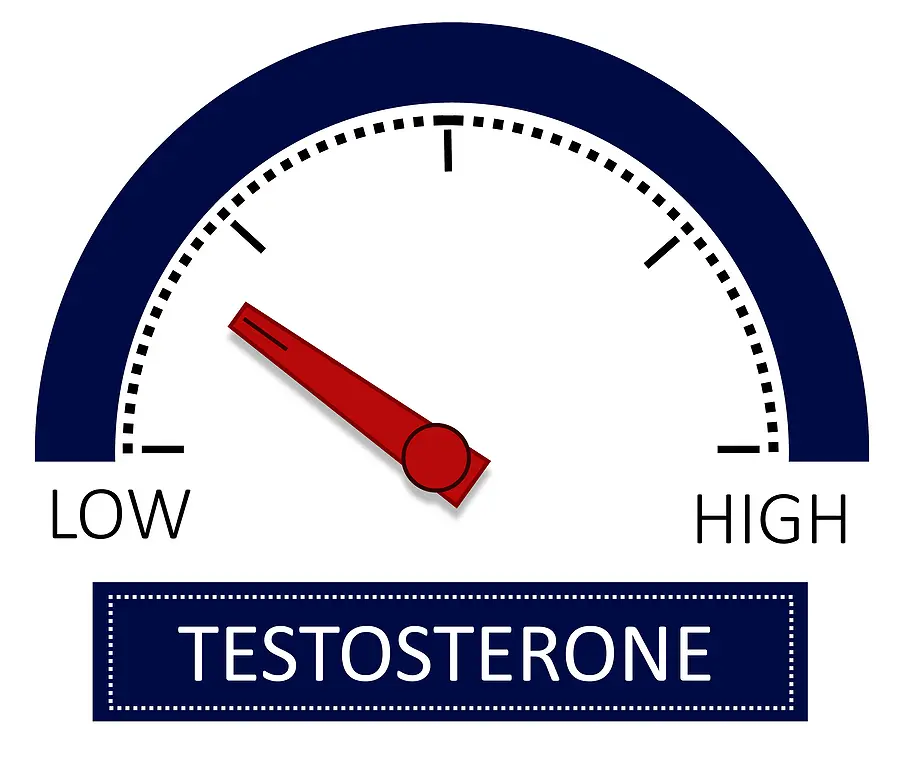

Low testosterone (also called male hypogonadism) happens when the testicles don't produce enough of the hormone testosterone to support normal male health, causing symptoms like low libido, fatigue, and loss of muscle mass. A JAMA Network study cited by the BBC found that roughly one in ten US men meet strict clinical criteria for low testosterone as of 2026. Diagnosis requires both symptoms and a confirmed low blood test result, and treatment ranges from lifestyle changes to prescription testosterone replacement therapy.
Key Takeaways
Low testosterone is defined by both symptoms and a blood test, not by numbers alone, most labs flag levels under roughly 300 ng/dL as low.
Common symptoms include low sex drive, erectile trouble, fatigue, mood changes, and shrinking muscle mass.
Causes range from testicular injury and ageing to obesity, certain medications, and pituitary conditions.
The FDA has moved to expand approved uses of testosterone injections for testosterone replacement therapy, including a possible new indication for idiopathic hypogonadism, as of April 2026.
Professional bodies like the Endocrine Society still caution against routine screening and broad use of therapy outside confirmed hypogonadism.
Military screening policy has pushed low testosterone into mainstream political debate in 2026.
Natural strategies, sleep, weight management, resistance training, can meaningfully support healthy testosterone levels in milder cases.
Treatment usually takes three to six months to show full symptom improvement.
What Is Low Testosterone?
Low testosterone means the testicles are not producing enough of the hormone testosterone to meet the body's needs, a condition medically known as male hypogonadism. Most laboratories consider a total testosterone level below about 300 ng/dL (10.4 nmol/L) low, though the exact cutoff varies by lab and by individual symptoms.
Testosterone is the primary male sex hormone, made mostly in the testicles under signals from the brain's pituitary gland. Levels naturally decline with age, dropping roughly 1% per year after age 30 to 40, according to Harvard Health Publishing. A diagnosis of clinically significant low testosterone requires two things together: a confirmed low blood level on at least two separate morning tests, and physical or psychological symptoms that match.
Updated 2025 European Association of Urology guidance on sexual and reproductive health specifically calls out late-onset hypogonadism in ageing men, defined by both low circulating testosterone and a cluster of recognizable symptoms, rather than a number alone (per the guideline summary on PubMed). This matters because testosterone levels alone, without symptoms, rarely justify treatment.
Why Testosterone Matters for Men's Health
Testosterone affects far more than libido, it supports bone density, red blood cell production, muscle mass, mood, and cognitive sharpness throughout a man's life. Keeping levels in a healthy range is tied to overall long-term health, not just sexual function.
The hormone also plays a role in:
Body composition, maintaining lean muscle and limiting fat gain
Mood and cognition, low and unusually high levels have both been linked to mood changes
Bone health, supporting density and lowering fracture risk
Cardiovascular regulation, though the relationship with heart health is still debated among researchers
A note of caution: testosterone therapy given to men without a confirmed deficiency may actually increase cardiovascular risk rather than improve health, according to a review from Harvard Health Publishing. This is one reason medical providers insist on proper blood testing before starting therapy, rather than treating symptoms alone.
What Are the Symptoms of Low Testosterone in Men?
Symptoms of low testosterone typically include reduced sex drive, erectile difficulty, persistent fatigue, loss of muscle mass, increased body fat, and mood changes such as irritability or low mood. These symptoms often develop gradually, which is why many men dismiss them as normal ageing for years before seeking help.
Common physical and psychological symptoms low testosterone can cause include:
Reduced libido and fewer spontaneous erections
Erectile dysfunction or softer erections
Fatigue and low energy despite adequate sleep
Loss of muscle mass and strength, even with regular exercise
Increased body fat, especially around the abdomen
Mood changes: irritability, low motivation, or depressive symptoms
Reduced body and facial hair growth
Smaller or softer testicles
Difficulty concentrating or "brain fog"
Hot flushes or night sweats in more severe cases
Fox News coverage of military leader Pete Hegseth's low testosterone discussion prompted doctors to remind the public that fatigue and mood changes are often the earliest, most overlooked warning signs, not just sexual symptoms. Any combination of these signs lasting more than a few weeks is a reasonable trigger to request a blood test from a medical provider.
What Causes Low Testosterone?
Low testosterone has two broad categories of causes: primary hypogonadism, where the testicles themselves fail to produce enough hormone, and secondary hypogonadism, where the brain's signaling to the testicles breaks down. Ageing, injury, obesity, and certain medical conditions can trigger either type.
Primary hypogonadism (testicular causes) includes:
Testicle injury, trauma, or surgical removal
Undescended testicles from birth
Mumps orchitis or other testicular infections
Genetic conditions such as Klinefelter syndrome
Certain cancer treatments, including chemotherapy and radiation
Secondary hypogonadism (pituitary or hypothalamus causes) includes:
Pituitary tumors or disease
Obesity and metabolic conditions such as type 2 diabetes
Chronic use of opioid pain medication or anabolic steroids
Severe stress, illness, or rapid weight loss
Normal ageing, which gradually reduces hormone signaling
Other conditions linked to lower testosterone include sleep apnea, kidney or liver disease, HIV/AIDS, and excessive alcohol use. There is also growing political attention on this topic: Reuters reported in July 2026 that doctors questioned the evidence behind a new Pentagon plan to screen active-duty troops for low testosterone, arguing the science doesn't yet support broad military screening.
How Is Low Testosterone Diagnosed?
Doctors diagnose low testosterone using a combination of symptom review and a blood test measuring total and sometimes free testosterone, typically drawn in the morning when levels naturally peak. A single low result is not enough, most providers require at least two separate morning blood tests to confirm the diagnosis.
A typical diagnostic path looks like this:
Symptom review, the provider discusses libido, energy, mood, and physical changes
Morning blood test, total testosterone is measured, ideally before 10 a.m.
Repeat test, a second morning sample confirms a consistently low result
Follow-up labs, luteinizing hormone (LH), prostate-specific antigen (PSA), and sometimes free testosterone or thyroid panels help pinpoint the cause
Additional imaging, in some cases, pituitary MRI or testicular ultrasound if a structural cause is suspected
Resources like MedlinePlus, maintained by the NIH's National Library of Medicine, outline similar step-by-step diagnostic criteria for clinicians and patients alike. A PSA and prostate exam are standard before starting treatment, since testosterone therapy can affect prostate tissue and needs careful monitoring in men with prostate conditions or a history of prostate cancer.
Low Testosterone Treatment Options and Cost
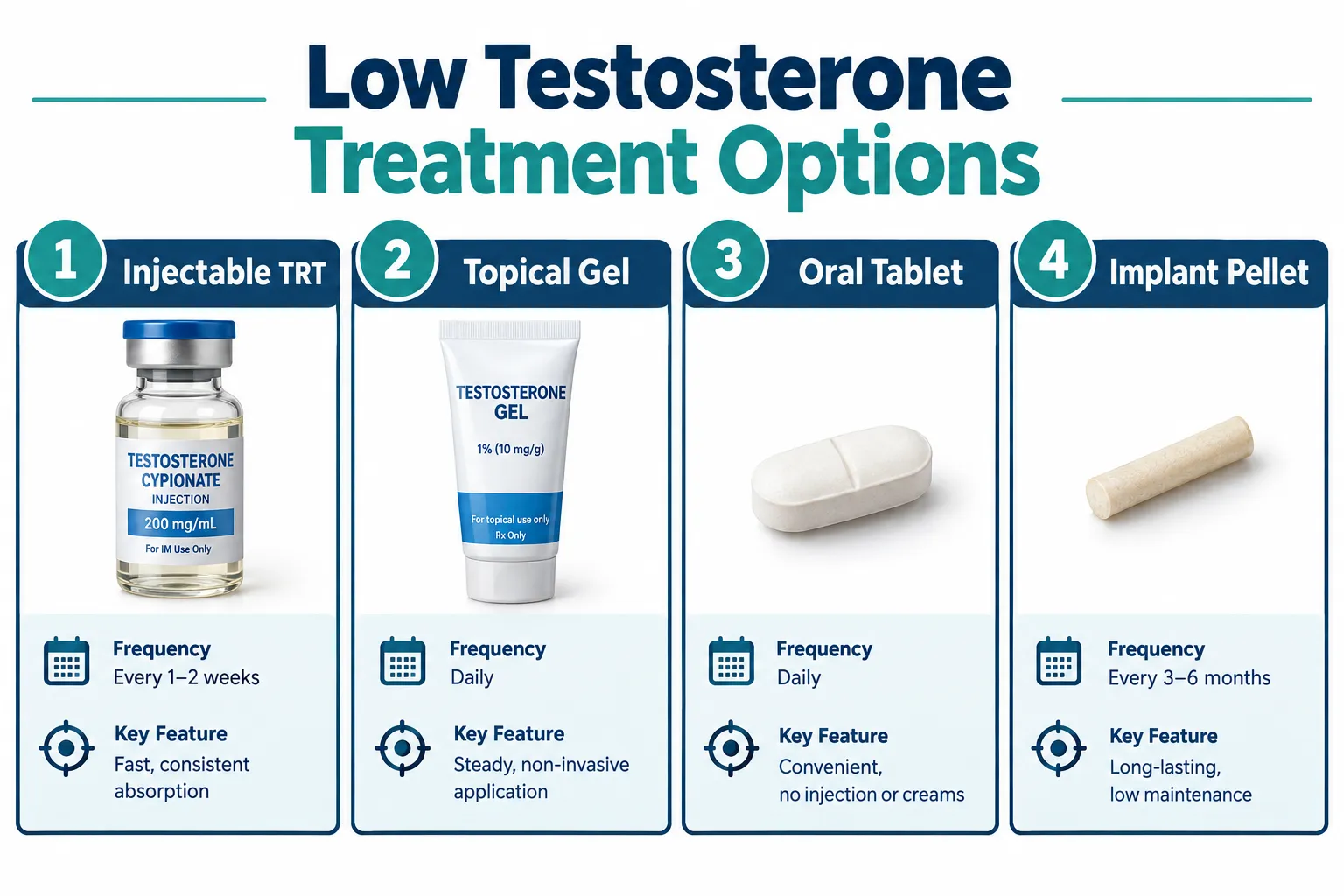
Treatment for low testosterone centers on testosterone replacement therapy (TRT), available as injections, topical gels, patches, oral tablets, or implanted pellets, chosen based on lifestyle, cost, and how consistently a man can stick with the regimen. Treatment is only recommended once hypogonadism is confirmed through blood testing and symptoms, not simply requested.
TRT Option | How It's Used | Typical Frequency | Key Consideration |
|---|---|---|---|
Injectable testosterone | Intramuscular or subcutaneous injection | Weekly to every 2 weeks | Levels can fluctuate between doses |
Topical gel | Applied daily to skin | Daily | Risk of transfer to others via skin contact |
Oral tablet | Swallowed capsule | Twice daily | Newer oral formulations avoid older liver risks |
Implant pellet | Inserted under skin in clinic | Every 3-6 months | Requires a minor in-clinic procedure |
In April 2026, the FDA invited manufacturers of approved TRT products to explore a new indication for low libido linked to idiopathic hypogonadism, low testosterone without a clear structural or genetic cause. This could expand who qualifies for treatment beyond classic hypogonadism cases. Cost varies by formulation and region; in the UK, treatment is typically accessed through an NHS GP referral to an endocrinology clinic or a private low testosterone clinic, with private gel or injection therapy often running into hundreds of pounds per year depending on dose and formulation.
NPR reported in August 2026 on rising safety debate around hormone therapy, noting that regulators and clinics are balancing demand for treatment against safety data that remains incomplete for long-term use in men without classic hypogonadism.
Natural Ways to Increase Testosterone Levels
Natural strategies can meaningfully support healthy testosterone levels, especially for men with mild or borderline low results tied to lifestyle factors rather than a structural testicular problem. These approaches won't replace medical therapy for severe hypogonadism, but they often amp up the body's own hormone production and improve how the body uses existing testosterone.
Evidence-informed habits include:
Weight management, losing excess body fat, especially visceral fat, can meaningfully boost testosterone
Resistance training, regular strength training 2-4 times weekly supports hormone production
Sleep, aiming for 7-9 hours nightly, since testosterone is produced mainly during sleep
Limiting alcohol, heavy drinking directly suppresses testosterone production
Managing chronic stress, high cortisol can decrease testosterone over time
Balanced diet, adequate zinc, vitamin D, and healthy fats support hormone synthesis
There is no reliable over-the-counter supplement proven to safely raise testosterone the way prescription therapy does, so men searching for low testosterone supplements should treat marketing claims with skepticism and discuss any product with a medical provider first.
Is Low Testosterone Dangerous?
Untreated low testosterone is not usually an emergency, but it carries real long-term health risks including bone loss, increased body fat, worsened mood, and potential cardiovascular effects if left unmanaged for years. A dangerously low level, generally considered under roughly 150-200 ng/dL with severe symptoms, warrants prompt medical evaluation.
Cardiovascular safety remains one of the most debated areas in current research. The Harvard Health Publishing review found that testosterone therapy given without confirmed deficiency may raise heart risk rather than lower it, which is why unsupervised or recreational use of testosterone products carries real danger. Left untreated, chronic low testosterone is also associated with lower bone density, higher fracture risk, and reduced quality of life, though it is rarely life-threatening on its own.
"Testosterone therapy without evidence of a true deficiency may do more harm than good to the heart.", summary finding from Harvard Health Publishing
Low Testosterone in Younger Men
Low testosterone in younger men is less common than in older men but is increasingly discussed, often linked to obesity, anabolic steroid misuse, pituitary conditions, or genetic causes rather than normal ageing. Any young man with symptoms should get a confirmed blood test rather than assuming low energy is unrelated.

Public attention on this issue grew sharply in 2026 after US Defense Secretary Pete Hegseth's low testosterone became a political talking point, with the New York Times reporting on a new military screening push for troops of all ages, and PBS NewsHour examining whether officials should make testosterone drugs easier to prescribe generally. Doctors interviewed by Reuters raised concern that screening young, healthy men broadly risks overdiagnosis and unnecessary treatment in a population where low readings are often temporary or lifestyle-related.
Low Testosterone and Erectile Dysfunction
Low testosterone can contribute to erectile dysfunction, but it is rarely the only cause, vascular disease, diabetes, medication side effects, and psychological factors often play a bigger role. Testosterone supports libido and the biological machinery behind erections, so a deficiency can worsen erectile function even when it isn't the root cause.
A sign that testosterone may be involved includes low sex drive alongside erectile trouble, rather than erectile dysfunction alone with normal libido. Providers typically evaluate both hormone levels and vascular or psychological factors together before attributing erectile dysfunction solely to low testosterone, since treating testosterone alone rarely fixes erectile dysfunction caused by other conditions.
How Long Does Testosterone Treatment Take to Work?
Most men notice improved libido and mood within three to six weeks of starting testosterone replacement therapy, while gains in muscle mass, body composition, and bone density typically take three to six months to become measurable. Full benefits can take up to a year for some symptoms.
A general timeline looks like this:
1-3 weeks: Mood and libido often improve first
3-6 weeks: Energy levels and sense of well-being improve
3-6 months: Muscle mass, strength, and fat distribution begin shifting
6-12 months: Bone density improvements become measurable on scans
Providers usually recheck blood levels around the three-month mark to confirm the dose is working and to rule out side effects like elevated red blood cell counts or prostate changes.
Low Testosterone Myths and Facts
The biggest myth about low testosterone is that every tired, moody, or less muscular man automatically has it, in reality, only a confirmed blood test alongside matching symptoms justifies a diagnosis. Overdiagnosis and unnecessary treatment remain active concerns among medical societies in 2026.
Common myths versus facts:
Myth: Any man over 40 should get tested routinely. Fact: Major societies, including guidance referenced by the Endocrine Society and Endocrinology specialists, recommend testing only when symptoms are present.
Myth: More testosterone always means better health. Fact: Excess testosterone therapy without true deficiency may increase cardiovascular risk, per Harvard Health Publishing.
Myth: Supplements can replace prescription therapy. Fact: No over-the-counter product is proven to safely restore clinically low levels.
Myth: TRT always causes prostate cancer. Fact: Current evidence does not show a direct causal link, though men with existing prostate cancer need careful monitoring.
When Should You See a Healthcare Provider?
See a medical provider if symptoms like persistent fatigue, low libido, mood changes, or erectile difficulty last more than a few weeks, or if testicles feel smaller, softer, or painful. Early evaluation allows treatable causes, like sleep apnea or medication side effects, to be identified instead of assuming symptoms are simply ageing.
A provider visit is especially important if symptoms appear suddenly in a younger man, if there is a family history of hormone conditions, or if general health concerns like unexplained weight changes accompany the other symptoms. A GP or endocrinology clinic can order the correct blood test and guide next steps, including referral to a specialist low testosterone clinic where needed. Learn what questions to bring to that appointment by listing symptoms, their duration, and any medications currently in use beforehand.
Frequently Asked Questions
How do you fix low testosterone in men?
Fixing low testosterone usually involves a confirmed diagnosis followed by testosterone replacement therapy (injections, gels, tablets, or pellets), combined with lifestyle changes such as weight loss, resistance training, better sleep, and reduced alcohol use. The right approach depends on the underlying cause and should be guided by a medical provider.
How to raise testosterone levels?
Testosterone levels can often be raised through weight management, regular strength training, 7-9 hours of sleep nightly, reduced alcohol intake, and stress management. For clinically low levels confirmed by a blood test, prescription testosterone replacement therapy is the most reliable option under medical supervision.
What are the symptoms of low testosterone for men?
Common symptoms include reduced sex drive, erectile difficulty, persistent fatigue, loss of muscle mass, increased body fat, mood changes, and smaller or softer testicles. Symptoms develop gradually, so many men mistake them for normal ageing before seeking a blood test.
What foods can lower testosterone levels?
Highly processed foods, excessive sugar, trans fats, and heavy alcohol consumption are linked to lower testosterone levels over time. Diets lacking zinc, vitamin D, and healthy fats, or chronic overeating leading to obesity, can also contribute to decreased testosterone production.
Conclusion
Low testosterone is a real, treatable medical condition, but it is defined by confirmed blood tests and matching symptoms, not assumptions about ageing or low energy alone. In 2026, the conversation has expanded well beyond the clinic, driven by FDA moves toward new treatment indications, military screening debates, and growing public attention, but the core medical approach hasn't changed: get tested, confirm the diagnosis, and treat the underlying cause.
Next steps worth taking:
Track symptoms for two to four weeks before an appointment
Request a morning blood test if fatigue, low libido, or mood changes persist
Ask a GP or endocrinology clinic about repeat testing before starting any therapy
Discuss lifestyle changes alongside any prescribed testosterone treatment
Avoid unregulated supplements marketed as quick fixes
Low testosterone, when properly diagnosed and managed with a qualified medical provider, is one of the more manageable hormone conditions affecting men's long-term health today.