Pay with Crypto: Receive FREE product and 5% discount code: CRYPTO5


A testosterone test is a simple blood test that measures how much testosterone is circulating in your body, usually checked in the morning when levels are highest. Doctors use it to diagnose low testosterone (hypogonadism), infertility, or hormone-related conditions, but most medical guidelines say you should only get tested if you have symptoms, not as a routine checkup. In 2026, the Pentagon made headlines by announcing mandatory annual testosterone screening for all U.S. service members 30 and older, a move experts call unprecedented and controversial .
Key Takeaways
A testosterone test measures total testosterone in your blood, and sometimes "free" testosterone too.
Most guidelines recommend testing only if you have symptoms like low libido, fatigue, or infertility, not for blanket screening .
Testosterone levels peak in the morning, so blood should be drawn before 10 a.m. for accurate results .
You should ideally get tested on two separate mornings to confirm a diagnosis.
Fasting is recommended but not always required, check with your lab.
Total testosterone below ~8 nmol/L in younger men or ~6 nmol/L in older men may be flagged as low, but context matters .
Direct at-home testosterone test kits exist, but blood draws at a lab are more accurate.
Insurance may cover the test if your doctor orders it for a medical reason.
Liquid chromatography, tandem mass spectrometry (LC-MS/MS) is the most accurate testing method .
The 2026 military screening plan applies to both men and women and is integrated into annual health assessments .
What Is a Testosterone Test and Why Do I Need One?
A testosterone test is a blood draw that measures the amount of testosterone, a key sex hormone, in your bloodstream. It's the standard way doctors check for hormonal imbalances, and it's typically ordered when someone shows signs of low testosterone (like reduced sex drive, persistent fatigue, or muscle loss) or when investigating infertility .
Here's what the test actually looks for:
Total testosterone: The full amount of testosterone in your blood, including both bound and unbound hormone.
Free testosterone: The small fraction that's not attached to proteins and is biologically active.
Related hormones: Sometimes your doctor will also order luteinizing hormone (LH), follicle-stimulating hormone (FSH), and sex hormone-binding globulin (SHBG) to get the full picture .
You might need a testosterone test if you're experiencing symptoms of low T, struggling with fertility, or monitoring a known hormone condition. As the Endocrine Society and other professional bodies emphasize, testing should be symptom-driven, not a casual add-on to your annual labs .
Who Actually Needs a Testosterone Test?
Most medical guidelines are clear: testosterone testing is for people with symptoms or specific risk factors, not for routine screening of healthy, asymptomatic adults . That's what makes the Pentagon's 2026 announcement so controversial, Defense Secretary Pete Hegseth directed mandatory annual screening for all active-duty and reserve service members aged 30 and up, with optional testing for younger troops .
Doctors are sharply divided on this. Some see potential value in catching untreated hypogonadism, while others call the plan "unusual" and point out there are no large trials showing population-wide screening improves outcomes . The concern is overdiagnosis, flagging borderline levels in people who feel fine, leading to unnecessary treatment .
You likely need a testosterone test if you have:
Persistent low sex drive or erectile dysfunction
Unexplained fatigue or depression
Loss of muscle mass or strength
Infertility concerns
Signs of delayed puberty (in younger patients)
A pituitary or testicular condition
What's the Difference Between Total and Free Testosterone Tests?
Total testosterone measures everything in your blood, while free testosterone measures only the unbound, active fraction. Most doctors start with total testosterone as the initial test of choice .
Feature | Total Testosterone | Free Testosterone |
|---|---|---|
What it measures | All testosterone (bound + free) | Only unbound, active hormone |
When it's used | First-line test for most patients | If total is borderline or SHBG is abnormal |
Accuracy | Reliable with LC-MS/MS methods | Direct analog immunoassays are inaccurate |
A 2025 FDA clearance of EUROIMMUN's automated chemiluminescence immunoassay marked the first FDA-cleared test for direct free testosterone measurement, reflecting growing demand for more precise, automated testing platforms . In May 2026, Revvity announced FDA clearance of an automated total testosterone assay, expanding the menu for high-throughput labs .
Common mistake: Don't rely on a single free testosterone result from a direct analog immunoassay, these are known to be inaccurate. Ask your doctor whether the lab uses LC-MS/MS or a validated calculated method .
What Time of Day Should I Get a Testosterone Test, and Do I Need to Fast?
Testosterone levels are highest in the morning and drop throughout the day, so blood should be drawn before 10 a.m. for the most accurate reading . Timing matters, a test done at 4 p.m. could show a level 20-30% lower than your true morning peak, potentially leading to a false low diagnosis.
Quick checklist for accurate testing:
Book your blood draw for before 10 a.m.
Get tested on two separate mornings to confirm results .
Avoid testing during acute illness or hospitalization, levels can drop temporarily .
Fasting is recommended by many protocols, so ask your lab whether to skip breakfast.
Be clinically stable, don't test right after major stress, surgery, or sleep deprivation.
How Much Does a Testosterone Test Cost, and Is It Covered by Insurance?
A testosterone test typically costs £20 to £80 out of pocket for total testosterone alone at a private lab or clinic, rising to about £100 to £200 for a fuller panel that includes free testosterone, SHBG, LH and FSH. At-home finger-prick mail-in kits usually cost £40 to £120, but venous blood draws analysed in a UKAS-accredited lab are generally more accurate.
On the NHS, the test is free if your GP orders it for a documented medical reason, such as symptoms of hypogonadism or infertility. It is not offered as a routine health check, and GPs often measure total testosterone only at first.
Private medical insurance (for example Bupa, AXA or Aviva) may cover the test when a GP or consultant orders it to investigate symptoms, subject to your outpatient diagnostics limit and pre-authorisation. Self-requested wellness or “curiosity” tests are usually not covered, so you would pay privately. Check your policy before booking.
Can I Get a Testosterone Test Without a Doctor?
Yes, you can order a testosterone test without a doctor's visit through direct-to-consumer lab services and at-home finger-prick kits. These services connect you with a lab order or mail you a collection device, and results come back online within days.
However, there's a trade-off. At-home kits are convenient, but they may use less precise methods than a clinical lab using LC-MS/MS. Also, interpreting results without a doctor can lead to confusion, a single borderline number doesn't mean you need treatment. The American Urological Association and Endocrine Society both recommend correlating lab values with clinical symptoms and confirming with repeat testing before making any decisions .
Choose a doctor-ordered lab test if you have symptoms and want an accurate, guideline-based diagnosis. Choose an at-home kit if you're just curious and want a rough baseline, but plan to follow up with a healthcare provider.
What Should My Testosterone Levels Be by Age?
Normal ranges vary by lab, but general guidance from recent protocols gives us useful benchmarks :
Age Group | Total Testosterone (nmol/L) | What It Might Mean |
|---|---|---|
Men under 30 | Below ~8 nmol/L | Potentially low, investigate further |
Men over 30 | Below ~6 nmol/L | Potentially low, correlate with symptoms |
Women | Varies widely by lab | Low values may indicate hormonal issues |
These numbers aren't absolute cutoffs. A result of 7 nmol/L in a 35-year-old with symptoms might warrant treatment, while the same number in a healthy, asymptomatic person might just need monitoring. Always interpret results alongside how you feel, not just the number on the page .
How Long Does It Take to Get Testosterone Test Results?
Most lab results come back within 1 to 3 business days. At-home kits may take 5 to 7 days because of shipping. If your doctor orders additional hormones (LH, FSH, SHBG), it might take a bit longer, but rarely more than a week.
How Testosterone Injections Impact a Testosterone Test
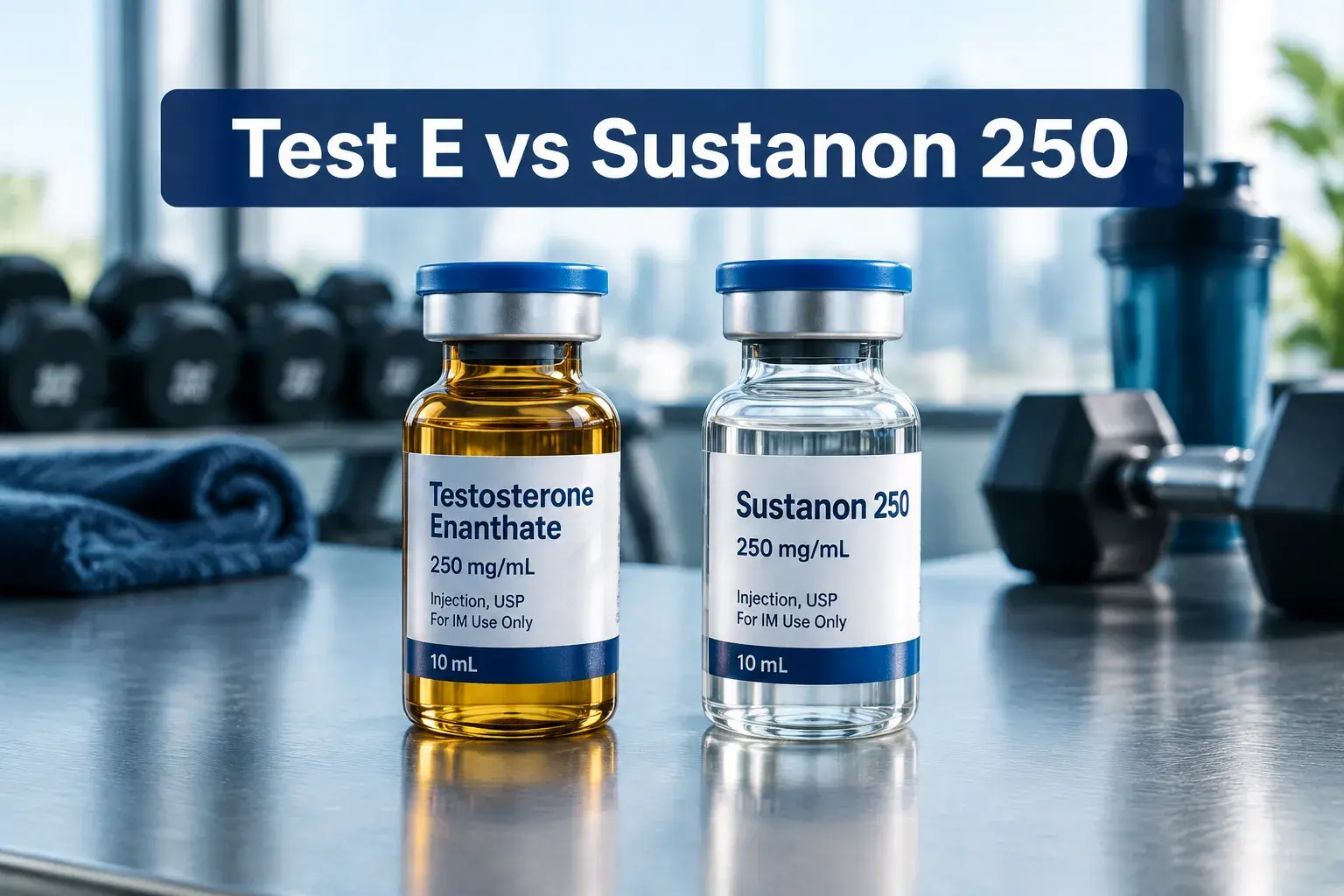
Testosterone injections raise the hormone level the blood test measures, but when you draw blood matters as much as the result itself. After an intramuscular dose (for example Sustanon, testosterone enanthate/cypionate, or Nebido), levels rise sharply, then fall until the next injection. A sample taken at the wrong point in that cycle can look falsely high or low and lead to unnecessary dose changes.
Peak vs trough levels
Injections create a peak (highest level after the shot) and a trough (lowest level just before the next dose).
Formulation (UK common) | Typical pattern | When to test |
|---|---|---|
Sustanon / enanthate / cypionate | Peak ~2-7 days after injection; levels fall over the dosing interval | Usually trough: morning of next injection, before the dose |
Nebido (testosterone undecanoate) | Longer-acting; steadier levels between doses | Often mid-interval or pre-dose, per clinic protocol |
UK clinic guidance often aims for a trough in the lower third of the reference range and avoids interpreting a single mid-peak result as “too high” without context. Clinical response still guides dosing as much as the number.
What else injections change on blood work
Injections don’t only raise total testosterone. They also tend to:
Suppress LH and FSH your pituitary stops signalling the testes, so these often fall low on therapy
Raise haematocrit and haemoglobin testosterone stimulates red blood cell production; levels above about 54% haematocrit usually need dose review or other action
Affect SHBG and free testosterone free T may rise more than total T alone suggests
Increase oestradiol in some men via aromatisation
That’s why monitoring panels usually include full blood count, PSA (age-appropriate), lipids, and sometimes oestradiol, not testosterone alone.
Why timing errors mislead
A common mistake is testing 1-2 days after an injection. Levels can look supraphysiological even on a standard dose, prompting an unnecessary cut. Conversely, testing late in a long interval may look “low” when the trough is simply due. Always tell the lab and your clinician which product you use, the dose, and the date of your last injection.
Practical checklist if you’re on injections
Book the blood draw for the correct point in your cycle (usually trough for shorter esters)
Prefer a morning sample when possible
Stay clinically stable, don’t test during acute illness
Ask whether the lab measures total T by LC-MS/MS and whether free T/SHBG are included
On the NHS or privately, monitoring is typically checked after dose changes, then at intervals (for example 3-6 months early on, then annually once stable) follow your prescriber’s schedule
Testosterone Test Results: High or Low, What Should I Do?
If your results are low, the next step is a repeat morning test to confirm, plus related hormone panels to find the cause. Low testosterone confirmed on two separate mornings, paired with symptoms, may lead to a diagnosis of hypogonadism and a discussion about treatment options like testosterone replacement therapy .
If your results are high, it could point to anabolic steroid use, a tumor in the testes or adrenal glands, or simply a lab error. High testosterone in women can indicate polycystic ovary syndrome (PCOS) or other endocrine conditions. Either way, don't self-diagnose, talk to a doctor or endocrinologist.
Edge case: A single low result during an acute illness or after poor sleep may be a false alarm. That's why guidelines say to test when you're clinically stable and repeat on a second morning .
Can Testosterone Tests Be Wrong or Inaccurate?
Yes, testosterone tests can be inaccurate. The method matters a lot. Liquid chromatography, tandem mass spectrometry (LC-MS/MS) is the gold standard, especially at low concentrations . Older direct analog immunoassays for free testosterone are known to be unreliable and shouldn't be used for diagnosis .
Other factors that can skew results:
Testing later in the day (levels naturally drop)
Acute illness, stress, or poor sleep
Certain medications, including opioids and steroids
Only testing once instead of confirming with a second draw
WADA's 2026 updated physician guidelines for therapeutic use exemptions require two morning serum total testosterone measurements plus LH, FSH, and SHBG, drawn at least a week apart, underscoring how important repeat, well-timed testing is .
What Are Alternatives to Blood Tests for Measuring Testosterone?
Blood tests remain the standard, but alternatives exist:
Saliva tests: Some at-home kits use saliva. They're convenient but less validated for clinical decision-making.
Urine tests: Used mainly in anti-doping and research settings.
At-home finger-prick kits: These are still blood-based but collected at home and mailed to a lab.
None of these are as well-validated as a morning serum blood draw analyzed by LC-MS/MS. If the result will influence treatment decisions, go with a proper lab blood test.
FAQ
Is a testosterone test covered by insurance?
Usually yes, if your doctor orders it for a medical reason like symptoms of low T or infertility. Without a documented reason, you may pay out of pocket.
Do I need to fast before a testosterone test?
Fasting is recommended by many protocols but not universally required. Check with your lab or doctor for specific instructions.
Can I get a testosterone test without a doctor?
Yes, through direct-to-consumer lab services and at-home kits, but results may be less accurate and harder to interpret without medical guidance.
What's a normal testosterone level for a 40-year-old man?
Normal ranges vary by lab, but total testosterone below roughly 6-8 nmol/L may be flagged as low depending on symptoms and age .
How accurate are at-home testosterone tests?
They can give a rough estimate, but clinical labs using LC-MS/MS are far more accurate, especially for borderline results.
Can one low testosterone test result mean I have hypogonadism?
No. Guidelines require two low morning results plus clinical symptoms before diagnosing hypogonadism .
Does the military really require testosterone screening now?
Yes. In July 2026, Defense Secretary Pete Hegseth announced mandatory annual screening for service members 30 and older .
What happens if my testosterone is high?
High levels could indicate steroid use, tumors, or (in women) PCOS. See a doctor for further evaluation.
Conclusion
A testosterone test is a straightforward but powerful tool, when used correctly. The key takeaways: get tested in the morning, confirm abnormal results with a second test, and always interpret numbers alongside how you actually feel. Don't chase a number on a lab report; chase a diagnosis backed by symptoms and repeat testing.
Your next steps:
If you have symptoms of low testosterone, talk to your doctor about ordering a morning total testosterone test.
Ask your lab whether they use LC-MS/MS for the most accurate results.
If your first result is low, schedule a second morning draw before making any treatment decisions.
Avoid at-home kits as your sole basis for diagnosis, use them as a starting point, not a finish line.
Testing smart beats testing often. Get the right test, at the right time, for the right reason.